• Welcome to your new Gnomio site

    Now, you are in control!

    Moodle is an open-source Learning Management System (LMS) that provides educators with the tools and features to create and manage online courses. It allows educators to organize course materials, create quizzes and assignments, host discussion forums, and track student progress. Moodle is highly flexible and can be customized to meet the specific needs of different institutions and learning environments.

    Moodle supports both synchronous and asynchronous learning environments, enabling educators to host live webinars, video conferences, and chat sessions, as well as providing a variety of tools that support self-paced learning, including videos, interactive quizzes, and discussion forums. The platform also integrates with other tools and systems, such as Google Apps and plagiarism detection software, to provide a seamless learning experience.

    Moodle is widely used in educational institutions, including universities, K-12 schools, and corporate training programs. It is well-suited to online and blended learning environments and distance education programs. Additionally, Moodle's accessibility features make it a popular choice for learners with disabilities, ensuring that courses are inclusive and accessible to all learners.

    The Moodle community is an active group of users, developers, and educators who contribute to the platform's development and improvement. The community provides support, resources, and documentation for users, as well as a forum for sharing ideas and best practices. Moodle releases regular updates and improvements, ensuring that the platform remains up-to-date with the latest technologies and best practices.

    Links of interest:

    (You can edit or remove this text)

Available courses

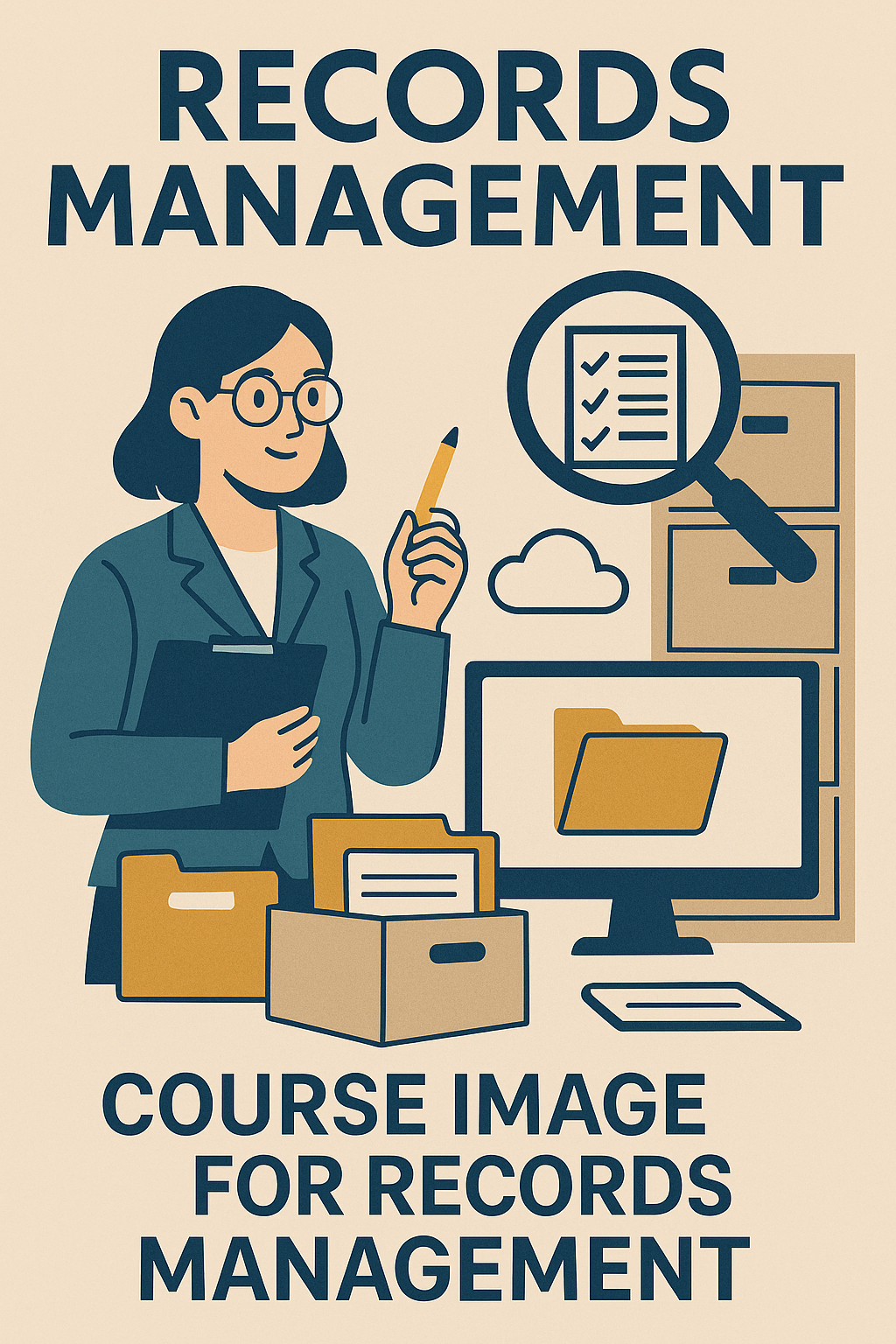
This course provides a comprehensive introduction to the principles, practices, and technologies of records management. Participants will learn how to effectively create, organize, maintain, and dispose of records in both physical and digital formats, ensuring compliance with legal, regulatory, and organizational requirements.

Key Learning Objectives

  • Understand the fundamentals of records management and its role in organizational efficiency.

  • Explore the lifecycle of records: creation, classification, storage, retrieval, retention, and disposal.

  • Gain knowledge of international standards and best practices (e.g., ISO 15489).

  • Learn strategies for managing electronic records, cloud storage, and digital archives.

  • Develop skills in policy writing, compliance, and risk management related to records.

  • Apply practical techniques for indexing, metadata management, and secure access control.

Target Audience

  • Administrative professionals

  • Information managers

  • Archivists and librarians

  • Compliance officers

  • Anyone responsible for handling organizational records

Course Format

  • Lectures & Discussions: Covering theory and frameworks.

  • Hands-on Exercises: Using case studies and record management systems.

  • Assessments: Quizzes and practical assignments to reinforce learning.

📘 ICT Course Description

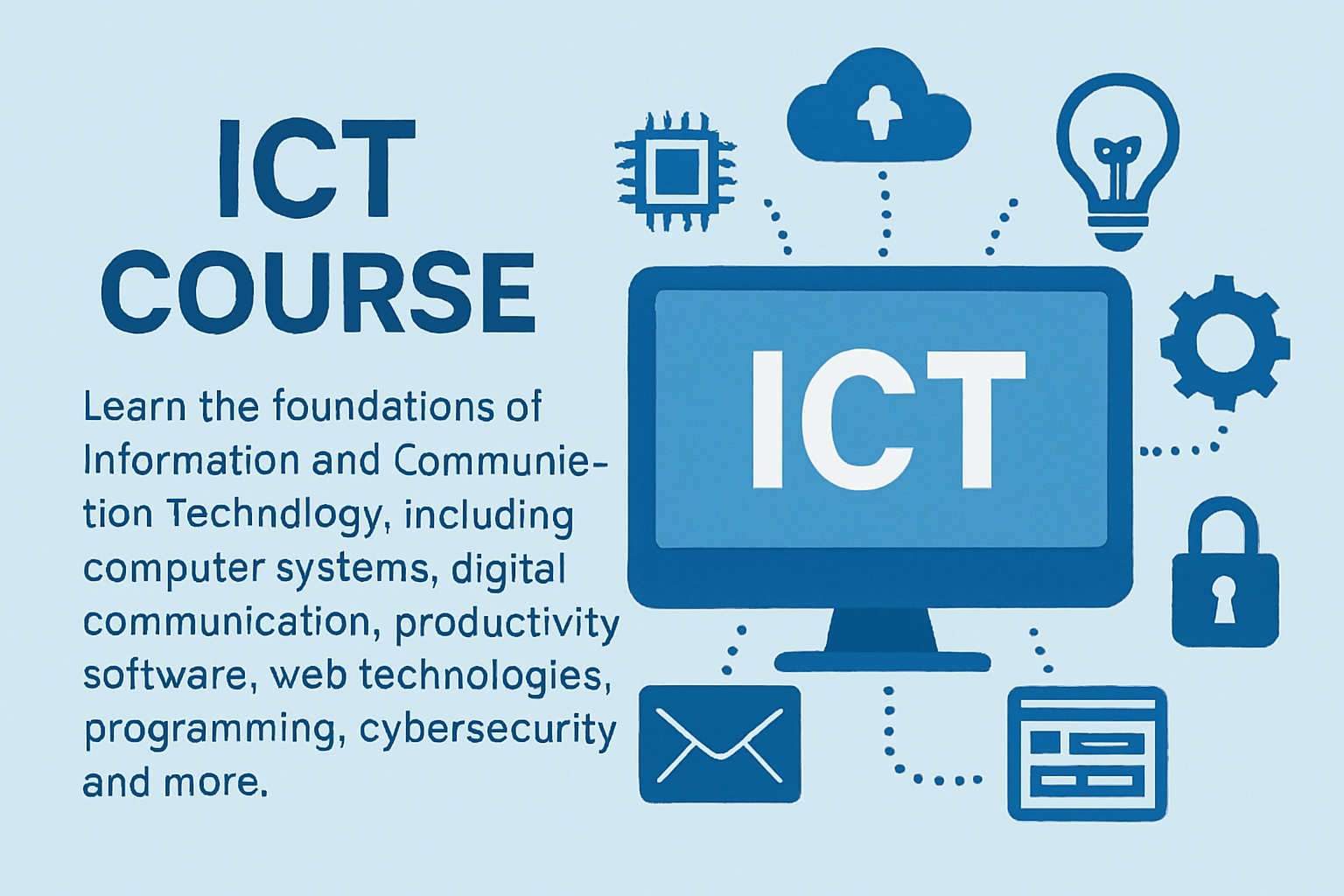
The Information and Communication Technology (ICT) course provides students with a solid foundation in the use of digital tools, systems, and applications that drive modern communication and information management. It combines theoretical knowledge with practical skills to prepare learners for academic, professional, and everyday digital environments.

Key Learning Areas

  • Computer Fundamentals: Understanding hardware, software, operating systems, and networks.

  • Digital Communication: Exploring email, social media, collaboration platforms, and emerging communication technologies.

  • Productivity Tools: Mastering word processing, spreadsheets, presentations, and database management.

  • Internet & Web Technologies: Safe browsing, online research, cloud computing, and web design basics.

  • Programming & Coding: Introduction to problem-solving using programming languages.

  • Cybersecurity & Ethics: Learning about data protection, responsible use of technology, and digital citizenship.

  • Emerging Technologies: Exploring AI, IoT, mobile applications, and their impact on society.

Course Outcomes

By the end of the course, students will be able to:

  • Apply ICT skills to solve real-world problems.

  • Communicate effectively using digital platforms.

  • Manage and analyze information using appropriate tools.

  • Demonstrate awareness of ethical and security issues in ICT.

  • Adapt to new technologies and innovations in the digital world.